
practice exams:
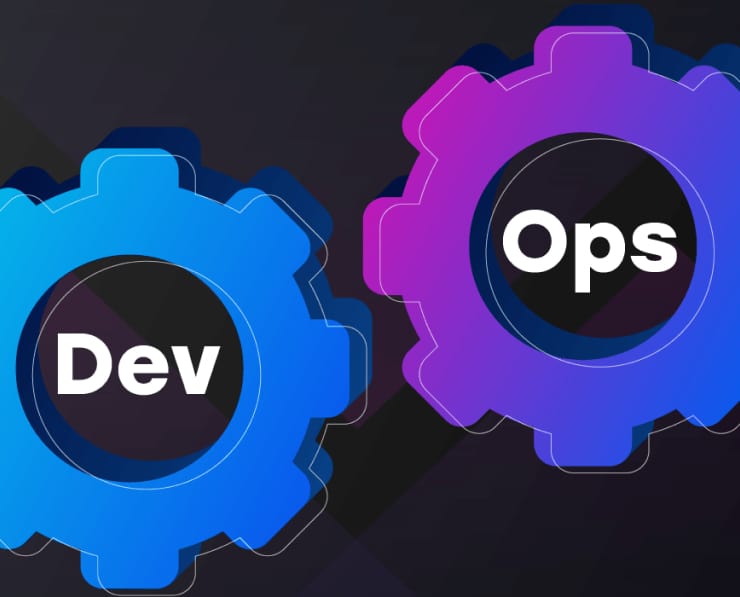
AWS DevOps Engineer Professional: AWS DevOps Engineer - Professional (DOP-C01)
-
14h 5m
-
141 students
-
4.5 (78)
You don't have enough time to read the study guide or look through eBooks, but your exam date is about to come, right? The Amazon AWS DevOps Engineer Professional course comes to the rescue. This video tutorial can replace 100 pages of any official manual! It includes a series of videos with detailed information related to the test and vivid examples. The qualified Amazon instructors help make your AWS DevOps Engineer Professional exam preparation process dynamic and effective!
Amazon AWS DevOps Engineer Professional Course Structure


About This Course
Passing this ExamLabs AWS DevOps Engineer - Professional (DOP-C01) video training course is a wise step in obtaining a reputable IT certification. After taking this course, you'll enjoy all the perks it'll bring about. And what is yet more astonishing, it is just a drop in the ocean in comparison to what this provider has to basically offer you. Thus, except for the Amazon AWS DevOps Engineer - Professional (DOP-C01) certification video training course, boost your knowledge with their dependable AWS DevOps Engineer - Professional (DOP-C01) exam dumps and practice test questions with accurate answers that align with the goals of the video training and make it far more effective.
AWS Certified DevOps Engineer Professional – Hands-On Cloud & DevOps Mastery
This course is designed to provide in-depth knowledge and practical expertise in managing, deploying, and automating applications in Amazon Web Services (AWS) using DevOps principles. Participants will gain hands-on experience with the full spectrum of AWS DevOps tools, CI/CD pipelines, monitoring solutions, infrastructure as code, and best practices for scalable, secure, and resilient cloud environments.
Through a combination of conceptual learning and practical exercises, learners will develop the skills required to design, implement, and manage continuous delivery systems and DevOps practices for modern enterprise applications. By the end of the course, participants will be proficient in using AWS services to streamline development workflows, automate deployment processes, and maintain high-performing infrastructure.
What You Will Learn From This Course
Understanding AWS DevOps principles and best practices
Designing and implementing Continuous Integration (CI) and Continuous Deployment (CD) pipelines
Automating infrastructure provisioning using AWS CloudFormation and Terraform
Implementing monitoring, logging, and performance management using AWS CloudWatch, CloudTrail, and X-Ray
Managing version control using AWS CodeCommit, Git, and other repositories
Building automated testing frameworks for applications deployed on AWS
Configuring containerized applications with Amazon ECS, EKS, and Docker
Implementing serverless DevOps solutions with AWS Lambda and API Gateway
Ensuring security compliance with IAM, KMS, and AWS Config
Optimizing AWS cost management and performance for enterprise workloads
Integrating DevOps practices with Agile and Scrum methodologies
Managing and scaling infrastructure for high availability and disaster recovery
Learning Objectives
By the end of this course, participants will be able to:
Deploy and manage applications in AWS environments: Gain expertise in provisioning and managing AWS infrastructure using automation tools and DevOps principles.
Implement Continuous Integration and Continuous Deployment pipelines: Design CI/CD workflows using AWS-native tools and third-party solutions.
Automate infrastructure with Infrastructure as Code (IaC): Utilize CloudFormation, Terraform, and AWS CLI for repeatable infrastructure deployments.
Monitor and maintain cloud applications: Employ AWS monitoring, logging, and tracing tools to ensure optimal performance and troubleshooting.
Enhance security and compliance: Apply best practices for identity and access management, encryption, and compliance frameworks.
Work with containerized and serverless applications: Deploy, scale, and monitor containerized and serverless workloads effectively.
Integrate DevOps into Agile workflows: Align DevOps strategies with Agile project management to improve deployment efficiency and team collaboration.
Optimize cost and performance in AWS environments: Implement strategies for resource optimization, performance tuning, and operational cost reduction.
Requirements
This course is structured to accommodate participants who meet the following prerequisites:
Basic understanding of cloud computing concepts
Familiarity with AWS core services such as EC2, S3, IAM, and VPC
Basic knowledge of Linux command-line and scripting languages
Understanding of version control systems like Git
Awareness of DevOps concepts such as CI/CD, automation, and containerization
While prior experience with AWS DevOps tools is helpful, the course is designed to provide hands-on exercises that cater to learners with varying levels of experience in cloud computing and DevOps.
Course Description
The Amazon AWS DevOps Engineer Professional course is a comprehensive program that equips learners with the knowledge and skills required to become proficient AWS DevOps professionals. The course dives deep into DevOps methodologies, cloud infrastructure management, automation, and operational excellence.
Participants will explore a wide range of AWS services essential for DevOps practices, including AWS CodePipeline, CodeBuild, CodeDeploy, CodeCommit, CloudFormation, CloudWatch, CloudTrail, Lambda, ECS, EKS, and more. The program emphasizes hands-on labs, real-world scenarios, and case studies to ensure practical understanding of deploying scalable and secure applications.
Through step-by-step guidance, learners will understand how to implement end-to-end DevOps pipelines, automate repetitive tasks, integrate monitoring solutions, and troubleshoot issues efficiently. This course also addresses the security, compliance, and cost optimization aspects of cloud DevOps practices, providing a holistic approach to cloud infrastructure management.
By the end of the program, participants will have the confidence to design, deploy, and manage complex AWS environments following best practices for DevOps, ensuring high availability, security, and operational efficiency.
Target Audience
This course is ideal for:
Cloud engineers aiming to specialize in AWS DevOps practices
System administrators seeking automation and deployment expertise
Software developers interested in implementing CI/CD pipelines
DevOps engineers looking to enhance AWS skills
IT professionals planning to pursue AWS DevOps Engineer certification
Organizations intending to adopt DevOps principles for cloud workloads
It is particularly suitable for professionals working in enterprises where scalable, automated, and highly available infrastructure is critical to business operations.
Prerequisites
Before enrolling in this course, learners should have:
Foundational knowledge of AWS: Understanding of services like EC2, S3, IAM, VPC, RDS, and Lambda
Basic Linux skills: Ability to execute shell commands, write basic scripts, and navigate Linux file systems
Version control familiarity: Experience using Git or similar tools for code management
Understanding of DevOps concepts: Awareness of CI/CD, automation, monitoring, and infrastructure as code
Networking basics: Knowledge of IP addressing, DNS, security groups, and firewalls
Having these foundational skills will allow learners to focus on advanced AWS DevOps tools, automation techniques, and cloud architecture design without being slowed down by prerequisite knowledge gaps.
Course Modules/Sections
The course is divided into multiple modules designed to provide a logical progression from foundational concepts to advanced AWS DevOps practices. Each module is carefully structured to build knowledge incrementally while incorporating hands-on exercises for practical application.
The first module introduces learners to the core principles of DevOps, covering automation, collaboration, continuous integration, continuous deployment, and monitoring. This module emphasizes the role of DevOps in modern software development and how AWS services support the DevOps lifecycle. Participants will gain an understanding of DevOps culture and key practices that enhance operational efficiency.
The second module focuses on AWS foundational services, including EC2, S3, RDS, IAM, and VPC. This section ensures learners are comfortable with the AWS environment and can provision and configure essential cloud resources. Practical exercises guide participants through creating, managing, and scaling AWS instances, setting up networking configurations, and implementing access controls.
The third module delves into version control and source code management. Learners explore AWS CodeCommit alongside Git, understanding repository management, branching strategies, and collaboration workflows. Hands-on labs allow participants to practice code versioning, merging, and resolving conflicts, ensuring a solid grasp of source code management in a cloud context.
The fourth module covers Continuous Integration and Continuous Deployment (CI/CD) pipelines. Participants will learn to design, implement, and maintain automated workflows using AWS CodePipeline, CodeBuild, and CodeDeploy. The module includes real-world scenarios for automating testing, building, and deployment, demonstrating how CI/CD reduces errors and accelerates software delivery.
The fifth module addresses Infrastructure as Code (IaC). Learners gain hands-on experience with AWS CloudFormation and Terraform to automate infrastructure provisioning. This section emphasizes repeatability, scalability, and version-controlled infrastructure, highlighting how IaC streamlines cloud resource management.
The sixth module introduces containerization and orchestration using Docker, Amazon ECS, and EKS. Participants learn how to package applications, manage container clusters, and deploy microservices efficiently. The module also includes practical exercises in scaling containerized workloads and managing resources for high availability.
The seventh module focuses on serverless computing and event-driven architectures. Using AWS Lambda, API Gateway, and Step Functions, learners explore building scalable, serverless applications that minimize operational overhead. Labs demonstrate real-world use cases, including microservices deployment, automated workflows, and serverless integrations with other AWS services.
The eighth module emphasizes monitoring, logging, and observability. Participants learn to implement robust monitoring solutions using CloudWatch, CloudTrail, and X-Ray. This module also covers alerting, dashboards, and performance optimization strategies to ensure systems remain reliable and responsive under varying workloads.
The ninth module covers security, compliance, and governance in AWS environments. Learners explore IAM policies, key management, auditing, and security best practices. This section integrates real-world security scenarios, emphasizing proactive measures to protect applications and data in the cloud.
The tenth module is dedicated to cost optimization, performance tuning, and operational excellence. Participants learn strategies to reduce AWS resource costs, monitor usage, and scale infrastructure efficiently. Real-world case studies illustrate practical approaches to balancing performance, reliability, and expenditure.
Each module concludes with practical exercises, quizzes, and mini-projects to reinforce learning and ensure participants can apply concepts in real-world scenarios. By progressing through these modules, learners develop the skills needed to become fully proficient AWS DevOps engineers capable of managing complex cloud environments.
Key Topics Covered
The course addresses a comprehensive range of topics critical to AWS DevOps engineering. Participants explore the principles of DevOps, including culture, automation, CI/CD, continuous testing, and infrastructure management. They will understand how to implement these principles using AWS-native services and tools.
Core AWS services such as EC2, S3, IAM, RDS, and VPC are covered in depth, ensuring learners can provision and manage compute, storage, database, and networking resources efficiently. The course also emphasizes security best practices, guiding participants on setting up identity management, encryption, and compliance measures for enterprise workloads.
Continuous Integration and Continuous Deployment form a major focus of the curriculum. Participants learn how to design end-to-end CI/CD pipelines using CodePipeline, CodeBuild, and CodeDeploy, integrating automated testing, build processes, and deployment strategies. The course also covers advanced pipeline strategies such as blue-green deployment, canary releases, and rollback procedures.
Infrastructure as Code is another key topic, with detailed instruction on using CloudFormation and Terraform to automate the provisioning and management of cloud resources. Learners explore templates, stacks, modules, and automation scripts to create repeatable, version-controlled infrastructure deployments.
Containerization and orchestration are covered extensively, with hands-on labs on Docker, ECS, and EKS. Participants learn to package applications, deploy container clusters, scale workloads, and implement service discovery. The course also addresses container security, logging, and resource management best practices.
Serverless computing is introduced to provide learners with expertise in Lambda functions, API Gateway, Step Functions, and event-driven architectures. The course demonstrates how serverless architectures can simplify deployments, reduce operational overhead, and improve scalability.
Monitoring, logging, and observability are critical topics covered in detail. Participants learn to implement CloudWatch metrics, alarms, dashboards, and CloudTrail logs for auditing. AWS X-Ray is introduced for tracing distributed applications, helping learners identify performance bottlenecks and troubleshoot complex workflows.
Security, compliance, and governance are integrated throughout the course. Learners explore best practices for IAM policies, key management, data protection, auditing, and adherence to regulatory requirements. Cost optimization strategies are also addressed, including resource sizing, scaling policies, and automated cost monitoring.
Finally, the course emphasizes real-world DevOps integration, including Agile methodology alignment, team collaboration, operational excellence, and continuous improvement. Learners gain practical experience through case studies, lab exercises, and guided projects to consolidate theoretical knowledge into applied skills.
Teaching Methodology
The teaching methodology for this course blends theoretical instruction with hands-on practice to ensure learners acquire both knowledge and practical skills. Each topic is introduced with conceptual explanations, followed by real-world examples to illustrate how AWS DevOps principles are applied in enterprise environments.
Hands-on labs form a core component of the methodology. Participants practice deploying infrastructure, configuring CI/CD pipelines, implementing monitoring solutions, and automating workflows using AWS services. These labs simulate real-world scenarios, allowing learners to experiment in a safe, guided environment while reinforcing concepts learned in lectures.
Interactive exercises encourage learners to troubleshoot issues, optimize pipelines, and implement best practices in scalable cloud architectures. Group discussions and collaborative projects are incorporated to foster teamwork, problem-solving, and knowledge sharing, reflecting the collaborative nature of DevOps in professional settings.
Case studies from real-world enterprises provide context for how AWS DevOps solutions are applied in production environments. Learners examine challenges, implementation strategies, and outcomes to understand the practical implications of their learning.
Supplementary resources such as video tutorials, reference guides, and documentation are provided to reinforce understanding. These resources allow learners to revisit complex topics, explore advanced techniques, and deepen their expertise in specific AWS services or DevOps practices.
The course also emphasizes continuous assessment and reflection, prompting learners to review their progress, identify gaps, and iterate on solutions. This methodology ensures participants graduate with confidence, practical skills, and the ability to implement AWS DevOps solutions independently.
Assessment & Evaluation
Assessment and evaluation are integral components of the course, designed to measure comprehension, practical skills, and problem-solving capabilities. Participants are evaluated through a combination of quizzes, hands-on exercises, lab assignments, and mini-projects to ensure they can apply theoretical concepts to real-world scenarios.
Quizzes are administered at the end of each module to test understanding of core concepts, terminology, and AWS service functionalities. These assessments help learners gauge their progress and identify areas requiring further study.
Hands-on lab exercises form a significant portion of evaluation. Participants are tasked with deploying infrastructure, configuring CI/CD pipelines, implementing monitoring, and automating workflows. Performance is assessed based on accuracy, efficiency, and adherence to best practices, reflecting the practical skills necessary for AWS DevOps engineering.
Mini-projects simulate real-world enterprise scenarios, requiring learners to design, implement, and manage complete AWS DevOps solutions. Participants must integrate multiple services, automate infrastructure, ensure security compliance, and optimize performance, demonstrating their ability to handle complex environments.
Peer collaboration and group assignments are also used to evaluate teamwork, communication, and problem-solving skills. Learners receive feedback from instructors and peers, promoting continuous improvement and reinforcing collaborative DevOps practices.
Final evaluation incorporates all assessments to provide a comprehensive overview of the learner's capabilities. Participants receive detailed feedback on strengths, areas for improvement, and recommendations for continued development, ensuring they are fully prepared to succeed in professional AWS DevOps roles.
Benefits of the Course
Enrolling in the Amazon AWS DevOps Engineer Professional course provides multiple benefits that empower participants to excel in cloud-based DevOps roles. One of the primary advantages is the development of in-demand technical skills that are highly sought after in today’s IT industry. Participants will gain hands-on experience with AWS services, automation tools, CI/CD pipelines, containerization, serverless architectures, and infrastructure as code, all of which are essential skills for modern DevOps professionals.
Another key benefit is enhanced career opportunities. AWS DevOps skills are critical for enterprises seeking to implement scalable, automated, and efficient cloud infrastructure. By completing this course, learners position themselves as qualified candidates for roles such as AWS DevOps Engineer, Cloud Engineer, Site Reliability Engineer, and Cloud Automation Specialist. The course also supports preparation for AWS DevOps Engineer Professional certification, further strengthening employability.
Practical, real-world training is a major benefit. The course includes hands-on labs, exercises, and projects that simulate enterprise environments, enabling participants to apply their learning immediately. This experiential approach ensures learners are not just familiar with concepts but can implement, troubleshoot, and optimize AWS DevOps solutions in practice.
The course also promotes efficiency and collaboration within IT teams. By learning DevOps methodologies and tools, participants acquire the ability to automate repetitive tasks, improve deployment speed, reduce errors, and facilitate smoother communication between development, operations, and QA teams. This capability is invaluable for organizations adopting Agile and DevOps practices, leading to improved project timelines and operational excellence.
In addition to technical skills, learners gain insights into cost optimization, security, and compliance. The course emphasizes best practices for resource management, monitoring, and security implementation, enabling participants to design secure, cost-efficient, and reliable cloud environments. This knowledge is crucial for enterprises striving for sustainable cloud operations.
The course also fosters problem-solving and analytical thinking. By working on real-world scenarios, learners develop the ability to analyze complex challenges, design automated solutions, and proactively address performance or security issues. These skills enhance a participant’s ability to contribute strategically to organizational cloud initiatives.
Finally, the course provides a structured learning pathway from foundational AWS concepts to advanced DevOps practices. This progressive learning model ensures participants build confidence and competence in each area before advancing, reducing knowledge gaps and reinforcing mastery of cloud DevOps principles.
Course Duration
The Amazon AWS DevOps Engineer Professional course is structured to provide a balance between comprehensive coverage of concepts and practical, hands-on experience. The typical duration of the course ranges from 8 to 12 weeks, depending on the learning pace and depth of lab exercises undertaken by participants.
The course is divided into multiple modules, each spanning one to two weeks. This modular approach allows learners to focus on specific skill sets, absorb concepts thoroughly, and apply them through hands-on labs before progressing to more advanced topics. The initial modules, which cover DevOps fundamentals, AWS core services, and version control, are usually shorter and focus on building foundational knowledge.
Intermediate modules, including CI/CD implementation, Infrastructure as Code, and container orchestration, are more intensive and involve extensive lab exercises. Participants may spend several days designing and deploying pipelines, automating infrastructure, and managing containerized workloads to reinforce their practical skills.
Advanced modules such as serverless architectures, monitoring and observability, security and compliance, and cost optimization typically require additional time to explore use cases, implement best practices, and troubleshoot real-world scenarios. These modules are designed to ensure participants are fully competent in managing production-level AWS environments.
Flexible learning options are often available, allowing participants to adjust the pace according to their schedules. For self-paced learners, the course duration may extend to 14–16 weeks to accommodate part-time study and deeper exploration of advanced topics. For instructor-led or intensive bootcamp-style formats, the course may be completed in 8 weeks with full-time commitment.
The duration also accounts for assessment and evaluation, including quizzes, lab assignments, mini-projects, and peer collaboration exercises. Adequate time is allocated for reflection, review, and iterative improvement, ensuring participants achieve mastery in AWS DevOps practices.
Overall, the structured duration balances theoretical learning, hands-on practice, and applied assessment, equipping participants with the confidence and competence to manage complex cloud environments independently.
Tools & Resources Required
To successfully complete the Amazon AWS DevOps Engineer Professional course, learners need access to specific tools and resources that facilitate hands-on practice, automation, and cloud management. The primary requirement is an AWS account with appropriate permissions to provision and manage resources. This account will enable learners to access services such as EC2, S3, IAM, CloudFormation, CodePipeline, CodeBuild, CodeDeploy, Lambda, ECS, EKS, CloudWatch, and CloudTrail.
Familiarity with command-line tools is essential. Learners are expected to use AWS Command Line Interface (CLI) for automating infrastructure tasks, managing resources, and executing deployment scripts. Basic Linux command-line knowledge is required to navigate, configure, and manage cloud-based servers effectively.
Version control tools such as Git and AWS CodeCommit are required for managing source code, branching, merging, and maintaining collaboration workflows. Participants may also use GitHub or GitLab repositories as complementary resources to enhance collaboration and practice CI/CD workflows.
For Infrastructure as Code, learners require access to AWS CloudFormation and Terraform. CloudFormation templates and Terraform scripts form the basis for automating infrastructure deployment, scaling, and version control. Learners may use an Integrated Development Environment (IDE) such as Visual Studio Code or IntelliJ IDEA for writing, editing, and managing these scripts efficiently.
Containerization and orchestration tools are essential for this course. Docker is required for building and managing containerized applications, while Amazon ECS and EKS provide the orchestration platforms for deploying, scaling, and monitoring containers. Learners may also require kubectl for managing Kubernetes clusters on EKS.
For serverless computing, AWS Lambda and API Gateway will be the primary tools. Participants will require access to development tools such as AWS SAM (Serverless Application Model) or the Serverless Framework to deploy and manage serverless applications effectively.
Monitoring, logging, and observability require tools such as AWS CloudWatch, CloudTrail, and X-Ray. Participants should be able to configure dashboards, alarms, metrics, and logging solutions for troubleshooting and performance analysis. Knowledge of additional monitoring tools, such as Prometheus or Grafana, can be beneficial but is not mandatory.
Security and compliance management will involve AWS IAM, KMS, and AWS Config. Learners should have access to these tools to implement role-based access controls, encryption, auditing, and regulatory compliance measures for enterprise workloads.
Other recommended resources include internet access for documentation reference, AWS whitepapers, and online tutorials. Participants are encouraged to use community forums, Git repositories, and DevOps blogs to explore additional techniques, troubleshoot issues, and gain insights into real-world AWS DevOps implementations.
Overall, the combination of AWS services, development tools, containerization platforms, monitoring utilities, and learning resources ensures that participants can fully engage with the course content and gain practical, hands-on expertise in AWS DevOps engineering.
Career Opportunities
Completing the Amazon AWS DevOps Engineer Professional course opens up a wide range of career opportunities in the rapidly growing cloud and DevOps industry. Participants will be equipped with the skills necessary to manage, deploy, and optimize applications and infrastructure on AWS, making them highly competitive candidates for various technical roles. Professionals can pursue positions such as AWS DevOps Engineer, Cloud Engineer, Site Reliability Engineer, Cloud Automation Specialist, and Infrastructure Engineer. These roles typically involve responsibilities such as designing and managing CI/CD pipelines, automating infrastructure, monitoring system performance, implementing security best practices, and maintaining operational efficiency across cloud environments. Organizations across industries increasingly rely on AWS cloud solutions, and DevOps expertise is essential for ensuring the smooth deployment, scaling, and management of these applications. This course prepares participants for both technical and strategic roles, enabling them to contribute to enterprise-level cloud adoption and DevOps transformation initiatives. Furthermore, learners can explore opportunities as Cloud Consultants, providing guidance to organizations on best practices for cloud adoption, cost optimization, and operational resilience. For professionals interested in management or leadership roles, the course equips them with the knowledge to oversee DevOps teams, manage cloud infrastructure projects, and align cloud strategies with business objectives. AWS certification paths, including AWS Certified DevOps Engineer Professional, further enhance credibility and open doors to higher-paying roles and global career prospects. By mastering the comprehensive skill set offered in this course, participants can confidently pursue careers in cloud engineering, DevOps, automation, and infrastructure management, positioning themselves as key contributors in technology-driven organizations that rely on cloud-first strategies.
Enroll Today
Enrolling in the Amazon AWS DevOps Engineer Professional course provides learners with the opportunity to gain hands-on experience, industry-recognized skills, and practical expertise that are essential for success in cloud and DevOps careers. The enrollment process is designed to be simple and accessible, allowing participants to begin their journey toward becoming proficient AWS DevOps professionals. By enrolling, learners gain access to structured course modules, comprehensive learning resources, hands-on labs, and expert guidance from experienced instructors. Participants can follow a step-by-step curriculum that progresses from foundational AWS services and DevOps principles to advanced topics such as CI/CD pipelines, container orchestration, serverless computing, infrastructure automation, monitoring, security, and cost optimization. Enrollment also provides access to assessment tools, quizzes, mini-projects, and real-world case studies, enabling learners to measure progress and apply theoretical knowledge in practical scenarios. In addition, learners receive guidance on preparing for AWS certification exams, positioning them for career advancement and professional recognition. By choosing to enroll today, participants can take advantage of the opportunity to develop in-demand skills, gain practical experience with AWS tools, and prepare for a rewarding career in cloud and DevOps engineering. The course offers flexibility for self-paced learning, allowing individuals to balance professional, academic, or personal commitments while progressing through the modules. Early enrollment ensures learners can access all course materials, resources, and lab environments, facilitating a seamless and immersive learning experience. By investing in this course, participants are making a strategic decision to enhance their technical expertise, professional credibility, and career prospects in one of the most in-demand sectors of the technology industry. Enrolling today is the first step toward mastering AWS DevOps engineering, gaining confidence in cloud operations, and positioning oneself for long-term success in high-growth technical roles.
Didn't try the ExamLabs AWS DevOps Engineer - Professional (DOP-C01) certification exam video training yet? Never heard of exam dumps and practice test questions? Well, no need to worry anyway as now you may access the ExamLabs resources that can cover on every exam topic that you will need to know to succeed in the AWS DevOps Engineer - Professional (DOP-C01). So, enroll in this utmost training course, back it up with the knowledge gained from quality video training courses!








Related Exams
- AWS Certified Generative AI Developer - Professional AIP-C01 - AWS Certified Generative AI Developer - Professional AIP-C01
- AWS Certified Solutions Architect - Associate SAA-C03 - AWS Certified Solutions Architect - Associate SAA-C03
- AWS Certified AI Practitioner AIF-C01 - AWS Certified AI Practitioner AIF-C01
- AWS Certified Solutions Architect - Professional SAP-C02 - AWS Certified Solutions Architect - Professional SAP-C02
- AWS Certified Security - Specialty SCS-C03 - AWS Certified Security - Specialty SCS-C03
- AWS Certified Cloud Practitioner CLF-C02 - AWS Certified Cloud Practitioner CLF-C02
- AWS Certified DevOps Engineer - Professional DOP-C02 - AWS Certified DevOps Engineer - Professional DOP-C02
- AWS Certified Advanced Networking - Specialty ANS-C01 - AWS Certified Advanced Networking - Specialty ANS-C01
- AWS Certified Machine Learning Engineer - Associate MLA-C01 - AWS Certified Machine Learning Engineer - Associate MLA-C01
- AWS Certified CloudOps Engineer - Associate SOA-C03 - AWS Certified CloudOps Engineer - Associate SOA-C03
- AWS Certified Developer - Associate DVA-C02 - AWS Certified Developer - Associate DVA-C02
- AWS Certified Data Engineer - Associate DEA-C01 - AWS Certified Data Engineer - Associate DEA-C01
- AWS Certified Security - Specialty SCS-C02 - AWS Certified Security - Specialty SCS-C02
Similar Courses
Log into your ExamLabs Account
×





