
Coming soon. We are working on adding products for this exam.
practice exams:
Pass Cisco ICND1 100-105 Exam in First Attempt Easily
Real Cisco ICND1 100-105 Exam Questions, Accurate & Verified Answers As Experienced in the Actual Test!
Cisco 100-105 Practice Test Questions, Cisco 100-105 Exam Dumps
Passing the IT Certification Exams can be Tough, but with the right exam prep materials, that can be solved. ExamLabs providers 100% Real and updated Cisco ICND1 100-105 exam dumps, practice test questions and answers which can make you equipped with the right knowledge required to pass the exams. Our Cisco 100-105 exam dumps, practice test questions and answers, are reviewed constantly by IT Experts to Ensure their Validity and help you pass without putting in hundreds and hours of studying.
A Comprehensive Guide to the 100-105 Certification: Networking Foundations
The Cisco 100-105 exam, also known as the Interconnecting Cisco Networking Devices, Part 1 (ICND1) v3.0, was one of the most popular and recognized entry-level exams in the IT industry. Passing this exam granted the Cisco Certified Entry Networking Technician (CCENT) certification, which served as a significant first step into a networking career. It also acted as the first of a two-exam path toward the highly respected Cisco Certified Network Associate (CCNA) Routing and Switching certification. This exam was designed for individuals seeking to validate their fundamental knowledge of network operations.
The 100-105 exam validated a candidate's ability to install, operate, and troubleshoot a small branch office network. It covered a broad range of foundational topics, including the OSI and TCP/IP models, network components, basic switch and router configuration, IP addressing, and fundamental security concepts. While this specific exam has been retired, the core networking principles it taught are timeless and remain the essential building blocks for any modern network engineer. This guide will explore these topics in depth, using the framework of the 100-105 exam.
The OSI Reference Model
A complete understanding of the Open Systems Interconnection (OSI) reference model is the absolute foundation for any networking certification, and it was a major topic on the 100-105 exam. The OSI model is a conceptual framework that standardizes the functions of a telecommunication or computing system into seven abstract layers. This layered approach simplifies troubleshooting by allowing you to isolate problems to a specific functional layer. The seven layers, from bottom to top, are the Physical, Data Link, Network, Transport, Session, Presentation, and Application layers.
Each layer has a specific responsibility. The Physical layer (Layer 1) deals with the physical transmission of bits, such as electrical voltages and cables. The Data Link layer (Layer 2) handles node-to-node data transfer and MAC addressing. The Network layer (Layer 3) is responsible for routing packets across different networks using IP addresses. The Transport layer (Layer 4) provides reliable end-to-end communication and flow control. The 100-105 exam required a deep understanding of the function of each of these layers.
The TCP/IP Model
While the OSI model is a conceptual framework, the TCP/IP model is the practical model upon which the modern internet is built. The 100-105 exam required a solid understanding of this model and its relationship to the OSI model. The TCP/IP model, also known as the Department of Defense (DoD) model, is typically described as having four layers: Network Interface (or Link), Internet, Transport, and Application. This is a more condensed and practical representation of network functions.
The Network Interface layer of the TCP/IP model roughly corresponds to the Physical and Data Link layers of the OSI model. The Internet layer maps directly to the OSI Network layer and is where IP operates. The Transport layer in both models is analogous, housing protocols like TCP and UDP. Finally, the TCP/IP Application layer combines the functions of the OSI Session, Presentation, and Application layers. The 100-105 exam often included questions that tested a candidate's ability to compare and map the layers of these two essential models.
Core Network Components: Hubs, Switches, and Routers
To pass the 100-105 exam, a candidate needed to clearly understand the function of the fundamental hardware components that make up a network. Hubs, switches, and routers are the primary building blocks, and they each operate at a different layer of the OSI model. A hub is the simplest of the devices. It operates at the Physical layer (Layer 1) and simply repeats any electrical signal it receives on one port out to all other ports. This creates a single, large collision domain, making it an inefficient and outdated technology.
A switch is a more intelligent device that operates at the Data Link layer (Layer 2). It learns the MAC addresses of the devices connected to its ports and forwards frames only to the specific port where the destination device is located. This creates a separate collision domain for each port, significantly improving performance. A router operates at the Network layer (Layer 3). Its job is to forward packets between different IP networks, making decisions based on the destination IP address. Routers are used to connect different LANs together and to connect a LAN to the internet.
Understanding Ethernet Fundamentals
Ethernet is the dominant technology for local area networking (LAN), and its fundamentals were a core part of the 100-105 exam. Ethernet defines the standards for the physical cabling and the data link layer protocols used in a wired network. This includes specifications for different types of twisted-pair copper cabling, such as UTP (Unshielded Twisted-Pair). A key practical skill is knowing the difference between a straight-through cable, used to connect a host to a switch, and a crossover cable, used to connect two similar devices like two switches together.
At the Data Link layer, Ethernet defines the structure of a frame, which is the PDU (Protocol Data Unit) at Layer 2. An Ethernet frame includes the source and destination MAC addresses, which are the unique, 48-bit hardware addresses burned into every network interface card. Ethernet also uses a media access control method called CSMA/CD (Carrier Sense Multiple Access with Collision Detection) to manage how devices share the network medium in older, hub-based networks.
Fundamentals of Switching
A modern LAN is built with switches, and the 100-105 exam required a deep understanding of how they operate. A Layer 2 switch performs three primary functions. The first is address learning. The switch examines the source MAC address of every frame it receives and builds a MAC address table, which maps MAC addresses to the switch ports they were learned on. The second function is forwarding and filtering. When a frame arrives, the switch looks up the destination MAC address in its table and forwards the frame only out of the corresponding port.
The third, and very critical, function is loop avoidance. If switches are connected redundantly to provide fault tolerance, it can create a Layer 2 loop, which would cause broadcast storms and bring the network down. To prevent this, switches use the Spanning Tree Protocol (STP). STP is a protocol that detects and blocks redundant paths, ensuring that there is only one active logical path between any two points in the network at any given time.
Basic Switch Configuration and CLI Navigation
A major part of the 100-105 exam was the ability to perform basic configuration on a Cisco switch using the Internetwork Operating System (IOS) command-line interface (CLI). This hands-on skill is the foundation of being a Cisco network technician. The first step is to connect to the switch's console port. Once connected, you are presented with a command prompt. The CLI has several different modes. The initial mode is User EXEC mode, which is very limited.
By typing the enable command, you enter Privileged EXEC mode, which allows you to view the system's configuration and perform diagnostic commands. To make changes, you must enter Global Configuration mode by typing configure terminal. From here, you can set the switch's hostname, configure passwords, and enter specific interface or line configuration modes to configure the switch's ports. The show command, used in Privileged EXEC mode, is one of the most important commands for verifying your configuration.
Securing Switch Ports with Port Security
A fundamental security task for a network technician is to secure the switch ports that users connect to. The 100-105 exam covered the configuration of a feature called Port Security. Port Security allows an administrator to restrict the input to an interface by limiting the MAC addresses that are allowed to send traffic on that port. This is a powerful feature for preventing unauthorized users from connecting their own devices to the network.
You can configure Port Security to allow only a specific number of MAC addresses on a port. You can also statically configure the specific MAC addresses that are allowed or have the switch dynamically learn the first MAC address it sees and "stick" it to the port. When a violation occurs (an unauthorized MAC address is detected), the port can be configured to take one of three actions: protect, restrict, or the default and most secure, shutdown, which disables the port.
Introduction to IP Addressing and Subnetting
The Network layer, and specifically IPv4 addressing, is one of the most challenging and important topics on the 100-105 exam. An IPv4 address is a 32-bit logical address, typically written in dotted-decimal notation, that uniquely identifies a device on a network. The address has two parts: a network portion, which identifies the network the device is on, and a host portion, which identifies the specific device on that network.
The subnet mask is a 32-bit number that is used to separate the network portion from the host portion of an IP address. Traditionally, IP addresses were divided into classes. Class A addresses were for very large networks, Class B for medium-sized networks, and Class C for small networks. While this classful system is now largely historical, understanding it is a key first step to mastering the more modern and flexible technique of classless addressing and subnetting.
Preparing for Foundational Exam Questions
Success on the 100-105 exam is built upon a complete and thorough understanding of these foundational topics. The exam questions are designed to test not just your ability to recall facts but your ability to apply these concepts. You can expect questions that require you to identify the correct OSI layer for a given protocol or device, to predict the behavior of a switch based on its MAC address table, or to interpret the output of a basic show command from the CLI.
The best way to prepare is to combine theoretical study with hands-on practice. Use a network simulator, like Cisco Packet Tracer, to build simple networks with switches and hosts. Practice navigating the CLI, configuring basic settings like the hostname and passwords, and setting up Port Security. A solid grasp of the OSI model and the fundamentals of Ethernet and switching will provide the confidence you need for the 100-105 exam.
Mastering IPv4 Subnetting
One of the most critical and challenging skills required for the 100-105 exam is IPv4 subnetting. Subnetting is the process of taking a large network and dividing it into multiple, smaller sub-networks, or subnets. This is done to improve network performance by reducing the size of broadcast domains and to allow for a more efficient and organized allocation of IP addresses. The process involves "borrowing" bits from the host portion of an IP address and using them to create a new subnet portion of the address.
This is accomplished by using a custom subnet mask. For example, by using a subnet mask of 255.255.255.192 instead of the standard 255.255.255.0 for a Class C network, you can create four separate subnets. The 100-105 exam requires you to be able to perform subnetting calculations quickly and accurately. This includes being able to determine the number of subnets and hosts per subnet for a given address and mask, and to find the network address, broadcast address, and range of valid host addresses for any given subnet.
Variable Length Subnet Masking (VLSM)
Variable Length Subnet Masking, or VLSM, is a technique that takes subnetting one step further by allowing you to use different subnet masks for different subnets within the same network. A solid understanding of VLSM was a key topic for the 100-105 exam. The primary benefit of VLSM is that it allows you to allocate IP addresses much more efficiently and to avoid wasting them.
For example, imagine you need to create a network with several departmental LANs that have 25 hosts each, and you also need to connect your routers together with point-to-point links that only require two IP addresses. Without VLSM, you would have to use a subnet large enough for 25 hosts for your router links, wasting many addresses. With VLSM, you can use a /27 mask (255.255.255.224) for your departmental LANs and a much smaller /30 mask (255.255.255.252) for your point-to-point links, conserving your address space.
Route Summarization
Route Summarization, also known as route aggregation, is the process of combining multiple, contiguous network routes into a single, summary route. This is another technique for managing IP networks efficiently, and its concepts were covered in the 100-105 exam. The primary benefit of route summarization is that it reduces the size of the routing tables on the routers in your network.
Instead of a router needing to know about every single individual subnet in a remote part of the network, it can be configured with a single summary route that points to that remote location. This makes the routing tables smaller, which in turn reduces the amount of memory and CPU processing required by the routers. It also improves the stability of the network, as a problem with an individual subnet will not cause the entire summary route to be removed from the routing tables.
Introduction to Routing
While switches operate at Layer 2 to connect devices within a single LAN, routers operate at Layer 3 to connect different networks together. The 100-105 exam required a deep understanding of the fundamental principles of routing. The primary function of a router is to receive an IP packet on one interface, look at the destination IP address in the packet's header, and then make a decision about where to forward that packet to get it closer to its final destination.
To make these decisions, a router uses a routing table. The routing table is a list of all the networks that the router knows about and which of its interfaces, or which next-hop router, should be used to reach each of those networks. A router can learn about these routes in two primary ways: they can be manually configured by an administrator as static routes, or the router can learn about them dynamically from other routers using a routing protocol.
Configuring Basic Router Settings
Similar to switches, a key hands-on skill for the 100-105 exam was the ability to perform basic configuration on a Cisco router using the IOS command-line interface. The process of navigating the different modes (User EXEC, Privileged EXEC, Global Configuration) is the same as on a switch. One of the first and most important tasks is to configure the router's interfaces.
Each interface on a router represents a connection to a different network and must be configured with an IP address and subnet mask from that network. This is done in interface configuration mode. Unlike switch ports, router interfaces are administratively shut down by default. After configuring the IP address, you must use the no shutdown command to enable the interface. The show ip interface brief command is an essential verification command to check the status and IP address of all the router's interfaces.
Static Routing
A static route is a route that is manually entered into the routing table by a network administrator. An understanding of how and when to use static routes was a core topic for the 100-105 exam. Static routes are configured in global configuration mode using the ip route command. The command requires you to specify the destination network address, the destination subnet mask, and the IP address of the next-hop router that should be used to reach that network.
Static routes are very secure and require minimal CPU resources on the router. They are often used in small, simple networks where the network topology does not change frequently. They are also commonly used to create a default route. A default route, also known as the gateway of last resort, is a special type of static route that tells the router where to send any packet for which it does not have a specific entry in its routing table. This is typically used to direct all internet-bound traffic to the ISP's router.
Introduction to Dynamic Routing Protocols
In larger or more complex networks, manually maintaining static routes becomes impractical. For these environments, dynamic routing protocols are used. The 100-105 exam introduced the concepts of dynamic routing. A dynamic routing protocol is a set of rules and algorithms that routers use to automatically exchange routing information with each other. This allows the routers to build and maintain their own routing tables without manual intervention.
A key benefit of dynamic routing is that the routers can automatically adapt to changes in the network topology. If a link goes down, the routers will detect this change, exchange new information, and automatically calculate a new, alternate path to the destination if one is available. The 100-105 exam focused on one specific type of dynamic routing protocol, which is a distance-vector protocol, and one of the most common interior gateway protocols.
Routing Information Protocol (RIPv2)
The primary dynamic routing protocol covered in detail on the 100-105 exam was the Routing Information Protocol version 2 (RIPv2). RIP is a distance-vector protocol, which means that it makes its routing decisions based on a single metric, which is the hop count (the number of routers a packet must cross to reach its destination). Routers running RIP periodically send their entire routing table to their directly connected neighbors.
Configuring RIPv2 on a Cisco router is a relatively simple process. You enable the routing protocol and then use the network command to specify which of the router's own directly connected networks should be advertised to its neighbors. While RIPv2 is easy to configure, it has limitations, such as a slow convergence time and a maximum hop count of 15, which make it unsuitable for very large networks. However, it serves as an excellent introduction to the principles of dynamic routing.
Introduction to IPv6
While IPv4 is still widely used, the world is gradually transitioning to its successor, IPv6. The 100-105 exam required a foundational understanding of the basics of IPv6. IPv6 was created to address the eventual exhaustion of the IPv4 address space. An IPv6 address is a 128-bit address, which provides a virtually limitless number of unique addresses. These addresses are written as eight groups of four hexadecimal digits, separated by colons.
IPv6 includes several improvements over IPv4, such as a simplified header, built-in support for security (IPSec), and automatic address configuration. The 100-105 exam required candidates to be able to recognize the format of an IPv6 address, to understand the different types of IPv6 addresses (e.g., global unicast, link-local), and to be able to perform basic configuration of an IPv6 address on a router interface.
Managing Cisco Devices
A key part of the 100-105 exam was understanding the basic operational tasks involved in managing Cisco IOS devices. This includes managing the configuration files. A Cisco device has two main configuration files: the running-config, which is the active configuration stored in RAM, and the startup-config, which is the backup configuration stored in non-volatile RAM (NVRAM). Any changes you make in configuration mode are applied immediately to the running-config.
To ensure that these changes are not lost if the device is rebooted, you must save them to the startup-config using the copy running-config startup-config command. The exam also covered the process of backing up and restoring the IOS software image itself, typically using a TFTP server. Another key operational skill is being able to perform a password recovery procedure to regain access to a device if the passwords have been lost.
Advanced Switch Configuration: VLANs
One of the most powerful features of a modern switch, and a major topic on the 100-105 exam, is the ability to create Virtual LANs, or VLANs. A VLAN is a logical grouping of switch ports that creates a single broadcast domain. In essence, it allows you to take a single physical switch and partition it into multiple, logically separate virtual switches. Devices in one VLAN cannot communicate directly with devices in another VLAN, even if they are plugged into the same physical switch.
VLANs are used to improve network performance by reducing the size of broadcast domains and to enhance security by segmenting different groups of users. For example, you could create separate VLANs for the Sales, Engineering, and Finance departments. To create a VLAN on a Cisco switch, you use the vlan command in global configuration mode and then assign switch ports to that VLAN in interface configuration mode using the switchport access vlan command.
VLAN Trunking with 802.1Q
If you have multiple switches in your network and you want to extend your VLANs across them, you must use a technology called VLAN trunking. An understanding of trunking was a critical requirement for the 100-105 exam. A trunk is a point-to-point link between two switches that can carry the traffic of multiple VLANs simultaneously. The industry-standard protocol for VLAN trunking is IEEE 802.1Q.
When a frame is sent across an 802.1Q trunk, the sending switch adds a special "tag" to the Ethernet frame. This tag contains the VLAN ID of the frame. The receiving switch then reads this tag to know which VLAN the frame belongs to, so it can forward it to the correct ports. A switch port is configured as a trunk port using the switchport mode trunk command. The 100-105 exam required a deep understanding of how to configure and verify these trunk links.
Inter-VLAN Routing
By design, devices in different VLANs cannot communicate with each other at Layer 2. To allow communication between VLANs, you must use a Layer 3 device, which is a router. The process of forwarding traffic between different VLANs is called inter-VLAN routing, and the different methods for achieving this were a key topic on the 100-105 exam. The traditional method was to use a separate physical interface on the router for each VLAN.
A more modern and scalable approach, known as "router on a stick," uses a single physical router interface configured as a trunk. You then create a logical subinterface on the router for each VLAN. Each subinterface is configured with an IP address from its respective VLAN's subnet and acts as the default gateway for that VLAN. When a device in one VLAN wants to communicate with a device in another, it sends the traffic to its default gateway (the router), which then routes the traffic to the destination VLAN.
Introduction to WAN Technologies
While LAN technologies connect devices within a local area, Wide Area Network (WAN) technologies are used to connect networks over long geographical distances. The 100-105 exam required a foundational understanding of the common WAN connection types. This includes different types of leased lines, which are dedicated, private circuits that a company leases from a telecommunications provider to connect their sites. Common leased line technologies included T1, E1, and the older serial connections.
The exam also covered more modern WAN connectivity options, such as Metro Ethernet, which provides a high-speed, Ethernet-based connection within a metropolitan area, and MPLS (Multiprotocol Label Switching), which is a versatile and scalable technology used by service providers to create private WANs for their customers. A candidate for the 100-105 exam needed to be able to identify these different technologies and understand their basic characteristics and use cases.
Configuring a Serial WAN Link
Although becoming less common, traditional serial leased lines were still a relevant topic for the 100-105 exam as they provide a good introduction to WAN routing concepts. A serial connection is a point-to-point link between two routers. The physical connection requires a specific type of serial cable. One end of the link must be configured as the Data Communications Equipment (DCE) end, and the other as the Data Terminal Equipment (DTE) end. The DCE end is responsible for providing the clock signal that synchronizes the communication.
On a Cisco router, you configure a serial interface with an IP address and subnet mask. If the interface is the DCE end of the link, you must also configure a clock rate using the clock rate command. You must also specify the encapsulation protocol to be used on the link, which for back-to-back serial connections is typically either the default HDLC or the industry-standard PPP.
Point-to-Point Protocol (PPP)
The Point-to-Point Protocol, or PPP, is a standard Data Link layer protocol used for establishing a direct connection between two network nodes over a serial link. A solid understanding of its features was a requirement for the 100-105 exam. PPP is an enhancement over the older, proprietary HDLC protocol. It provides several key features that make it suitable for modern WAN links.
One of the most important features of PPP is its ability to provide authentication. PPP can be configured to use either the Password Authentication Protocol (PAP), which sends passwords in clear text and is not secure, or the Challenge-Handshake Authentication Protocol (CHAP), which uses a more secure, three-way handshake mechanism. PPP also supports link quality monitoring and can negotiate various Layer 3 protocol options, making it a flexible and robust choice for point-to-point WAN connections.
Dynamic Host Configuration Protocol (DHCP)
The Dynamic Host Configuration Protocol, or DHCP, is a network management protocol used to automatically assign IP addresses and other network configuration parameters to devices on a network. The 100-105 exam required a thorough understanding of how DHCP works and how to configure a Cisco router to act as a DHCP server. Manually configuring the IP address on every host in a network is a tedious and error-prone task. DHCP automates this process.
When a client device boots up, it sends a DHCP Discover message as a broadcast on the network. A DHCP server on the same network will hear this request and respond with a DHCP Offer message, offering an IP address from its pool of available addresses. The client then formally requests the address, and the server acknowledges it, completing the lease process. A Cisco router can be easily configured to provide this service for a small office network.
Network Address Translation (NAT)
Most organizations use private IP addresses, as defined in RFC 1918, for the hosts on their internal LAN. These private addresses cannot be routed on the public internet. To allow these internal hosts to communicate with the internet, a technology called Network Address Translation (NAT) must be used. A complete understanding of the different types of NAT was a major topic on the 100-105 exam. NAT is typically configured on the router that connects the internal network to the internet.
NAT works by translating the private source IP addresses of the internal hosts into a public, internet-routable IP address. The most common form of NAT is Port Address Translation (PAT), also known as NAT Overload. PAT allows multiple internal hosts to share a single public IP address by mapping each internal connection to a unique port number on the router. The 100-105 exam required the ability to configure both static NAT (one-to-one mapping) and PAT.
Access Control Lists (ACLs)
Access Control Lists, or ACLs, are a fundamental security tool used to filter traffic on a network. A deep and practical knowledge of how to create and apply ACLs was a critical skill for the 100-105 exam. An ACL is an ordered list of permit or deny statements that are applied to an interface on a router. When a packet tries to enter or leave that interface, the router compares the packet's information against the statements in the ACL, in sequential order.
The first statement that matches the packet is applied, and no further statements are checked. There is an implicit "deny all" statement at the end of every ACL. There are two main types of ACLs: standard and extended. Standard ACLs can only filter based on the source IP address. Extended ACLs are much more powerful and can filter based on the source and destination IP address, the protocol, and the source and destination port numbers.
Applying ACLs for Security and NAT
The 100-105 exam required candidates to know how to apply Access Control Lists to solve specific network problems. One of the most common use cases for ACLs is to provide a basic level of network security. By placing an ACL on an interface, you can control what traffic is allowed to enter or leave your network. For example, you could create an ACL that allows only established web traffic into your network while blocking all other types of connections.
ACLs are also used in conjunction with other features, such as Network Address Translation (NAT). When you configure PAT (NAT Overload), you need a way to tell the router which internal IP addresses should be translated. This is typically done by creating a standard ACL that identifies the range of private IP addresses used on your internal network. You then reference this ACL in your NAT configuration. This is a very common configuration pattern that was tested on the 100-105 exam.
Device Monitoring with Syslog and SNMP
To effectively manage a network, an administrator needs visibility into the health and status of the network devices. The 100-105 exam covered the fundamental protocols used for network monitoring: Syslog and SNMP. Syslog is a standard protocol for sending event and log messages from a device to a central logging server, known as a syslog server. A Cisco router or switch can be configured to send messages of a specific severity level to this server. This provides a centralized and persistent record of all important events, such as interface failures or security violations.
The Simple Network Management Protocol (SNMP) is a protocol for collecting and organizing information about managed devices on IP networks. An SNMP management station can poll devices for a wide range of performance and health metrics, such as CPU utilization, memory usage, and interface traffic statistics. It can also be used to receive asynchronous alerts, called traps, from a device when a specific event occurs. The 100-105 exam required a conceptual understanding of these protocols.
Network Time Protocol (NTP)
Accurate and synchronized time is crucial for a variety of network operations, especially for troubleshooting and security. The 100-105 exam required an understanding of the Network Time Protocol (NTP) and how to configure it. NTP is a protocol designed to synchronize the clocks of computers over a network. In a network, it is a best practice to configure a small number of internal servers as authoritative NTP servers. These servers then synchronize their time with highly accurate, public NTP servers on the internet.
All other devices on the internal network, including routers, switches, and servers, are then configured to synchronize their clocks with these internal NTP servers. This ensures that all devices in the network have a consistent and accurate time. This is critical for correlating log messages from different devices during a troubleshooting investigation and for ensuring the validity of time-stamped security events and digital certificates.
Cisco Discovery Protocol (CDP) and LLDP
Cisco Discovery Protocol, or CDP, is a proprietary Layer 2 protocol that is used to share information between directly connected Cisco devices. A solid understanding of CDP was a practical skill tested on the 100-105 exam. CDP runs by default on all Cisco devices. Devices periodically send CDP messages out of their interfaces. These messages contain information about the device, such as its hostname, the model of the device, the version of the IOS software it is running, and the interface it is sending the message on.
CDP is an invaluable tool for network discovery and troubleshooting. By using the show cdp neighbors command on a switch or router, you can instantly see a summary of all the directly connected Cisco devices, which can be a great help in documenting the network topology. Link Layer Discovery Protocol (LLDP) is an industry-standard, vendor-neutral protocol that provides similar functionality to CDP, and an awareness of it was also required for the 100-105 exam.
Managing the IOS Software Image
A key operational task for a network administrator is managing the Internetwork Operating System (IOS) software that runs on the Cisco devices. The 100-105 exam covered the basic procedures for this. This includes being able to view the current version of the IOS that a device is running, which is done using the show version command. This command also provides other important information, such as the device's uptime and the value of the configuration register.
The exam also required knowledge of the process for backing up and upgrading the IOS image. This is typically done using a Trivial File Transfer Protocol (TFTP) server. You would first copy the existing IOS image from the device's flash memory to the TFTP server as a backup. You would then copy the new IOS image from the TFTP server to the device's flash. Finally, you would configure the device to boot from the new image. This is a critical procedure for applying security patches or for enabling new features.
Managing Configuration Files
As discussed previously, a Cisco device has a running-config in RAM and a startup-config in NVRAM. The 100-105 exam required a deep understanding of how to manage these configuration files. It is a critical best practice to save the running configuration to the startup configuration frequently to avoid losing changes. It is also essential to have an off-box backup of the configuration. This can be done by copying the configuration file to a central TFTP or FTP server.
This backup is crucial for disaster recovery. If a device fails and needs to be replaced, you can restore its configuration from the backup, which is much faster and less error-prone than reconfiguring it from scratch. The process of restoring a configuration involves copying the backup file from the TFTP server back to the device's startup configuration and then rebooting the device.
Password Recovery Procedure
If the passwords for a Cisco router or switch are lost or forgotten, it is not possible to log in to the device to manage it. The 100-105 exam required candidates to be familiar with the password recovery procedure, which allows an administrator to regain access to the device. This procedure requires physical access to the device and a console connection. The process involves rebooting the device and sending a special break sequence during the boot process to interrupt it and enter a special mode called ROMMON (ROM Monitor).
From ROMMON, you change a setting called the configuration register to a value that tells the device to ignore its startup configuration file when it boots. The device then boots with a blank configuration. You can then enter privileged EXEC mode, copy the startup configuration into the running configuration, reset the passwords, and then save the new configuration. This is a critical skill for any network technician.
Troubleshooting Methodologies
A significant portion of the 100-105 exam was focused on troubleshooting. It is essential to have a structured and logical approach to diagnosing network problems. A common methodology is to use a layered approach, based on the OSI model. You can start your troubleshooting at either the bottom layer and work your way up (the bottom-up approach) or start at the top layer and work your way down (the top-down approach).
The bottom-up approach is often the most effective for network connectivity issues. You start by checking the physical layer (is the cable plugged in? are the link lights on?). You then move to the data link layer (is the switch port in the correct VLAN? is port security enabled?). Next, you check the network layer (does the host have a correct IP address and default gateway? can you ping the gateway?). This systematic process is much more efficient than randomly guessing at the cause of the problem.
Common Troubleshooting Scenarios
The 100-105 exam would present various common troubleshooting scenarios. For example, a user might report that they cannot access the internet. Using a structured methodology, you would first verify their local connectivity. Can they ping their own IP address? Can they ping their default gateway? If they can ping their gateway, you know that the local LAN segment is likely working correctly.
The next step would be to test name resolution. Can they ping a public IP address, but not a domain name? If so, the problem is likely with the DNS server configuration. You would then check the DNS settings on the client and the router. The show ip interface brief, show ip route, and ping and traceroute commands are the essential tools for working through these types of Layer 3 connectivity problems.
Final Thoughts on Infrastructure Management
The topics covered in this section represent the core operational duties of an entry-level network technician. The 100-105 exam was designed to ensure that a certified individual had the practical skills to keep a small network running smoothly. This includes the ability to monitor the network for problems, to perform routine maintenance tasks like backups and software upgrades, and to apply a logical methodology to troubleshoot and resolve issues when they occur.
While the specific commands and interfaces may change as technology evolves, the underlying principles of proactive monitoring, configuration management, and systematic troubleshooting remain the same. A solid foundation in these areas, as tested by the 100-105 exam, is what separates a professional network administrator from someone who simply knows how to plug in cables. It is the core of responsible and effective network operations.
Deconstructing the 100-105 Exam Blueprint
The single most important document for your final preparation for the 100-105 exam is the official exam blueprint, or "exam topics," provided by Cisco. This document is the definitive source that outlines every domain, topic, and sub-topic that can be included on the test. Your final review should be meticulously structured around this blueprint. The main domains typically include Network Fundamentals, LAN Switching Technologies, Routing Technologies, Infrastructure Services, and Infrastructure Maintenance.
Use the blueprint as a final self-assessment checklist. Go through each line item and honestly rate your confidence level. For example, under "Routing Technologies," can you describe the concept of a default route? Under "LAN Switching," can you configure port security? For any topic where you feel you need more review, focus your remaining study time there. Ignoring the official blueprint is the most common mistake candidates make when preparing for the 100-105 exam.
Mastering IP Subnetting and VLSM
Of all the technical topics on the 100-105 exam, IPv4 subnetting is often the one that candidates find most challenging. It is also one of the most critical skills that you absolutely must master to pass. In your final review, dedicate a significant amount of time to practicing subnetting problems. You should be able to perform the necessary calculations quickly and accurately without a calculator. This involves being comfortable with binary-to-decimal and decimal-to-binary conversions.
You should practice different types of problems. Given an IP address and a subnet mask, be able to determine the network address, the broadcast address, and the range of usable host addresses. Given a set of network requirements (e.g., a certain number of subnets and hosts per subnet), be able to determine the appropriate subnet mask. Practice with VLSM scenarios where you have to allocate address space efficiently. There are many online resources and practice problem generators that can help you to hone this essential skill.
The Importance of Hands-On Practice
The 100-105 exam is not just a test of theoretical knowledge; it is a test of your practical, hands-on skills with the Cisco IOS command-line interface. Rote memorization of commands is not enough. You need to have "muscle memory" and a real understanding of how to configure, verify, and troubleshoot Cisco devices. The best way to achieve this is through hands-on practice. If you do not have access to physical lab equipment, using a network simulator is the next best thing.
Cisco's own Packet Tracer is an excellent and free tool that is specifically designed to prepare candidates for the CCENT and CCNA exams. It provides a realistic simulation of the Cisco CLI and allows you to build and test complex network topologies. In your final review, spend several hours in Packet Tracer building small networks, configuring switches with VLANs and port security, and configuring routers with static and RIPv2 routing.
Key show Commands to Know
In the world of Cisco networking, the show commands are your best friends. They are the primary tools you will use to verify your configurations and to troubleshoot problems. The 100-105 exam will expect you to be extremely familiar with the output of the most common show commands. For switches, you must know show running-config and show startup-config. You should also master show vlan brief, show interfaces trunk, and show mac address-table.
For routers, in addition to the configuration commands, you must know show ip interface brief to check the status of your interfaces. The most important command for troubleshooting routing is show ip route, which displays the router's routing table. You should be able to look at the output of this command and identify static routes, RIP routes, and directly connected networks. The show cdp neighbors command is also essential for discovering the network topology.
Tackling the Exam Questions
When you are taking the 100-105 exam, it is crucial to read every question and all of its answer options very carefully. The questions are often designed to test your precise understanding of a concept. A single word can be the key to choosing the correct answer. For simulation-based or scenario-based questions, take a moment to fully understand the network topology and the specific goal of the task before you start configuring anything.
Use the process of elimination to your advantage. For multiple-choice questions, you can often immediately identify one or two answers that are clearly incorrect. This will significantly increase your chances of selecting the correct answer from the remaining options. Manage your time wisely. If you get stuck on a difficult question, make your best educated guess, mark it for review, and move on. It is better to answer every question than to run out of time.
Understanding Question Formats
The 100-105 exam, like other Cisco exams, featured several different types of questions. In addition to standard multiple-choice (single and multiple answer) questions, you could expect to see drag-and-drop questions, where you might have to match a term with its definition or place steps of a process in the correct order. The most challenging question types are the simulations.
A simulation question will present you with a network topology and give you access to a simulated version of the Cisco IOS command-line interface. You will then be asked to perform a specific configuration task or to troubleshoot and fix a problem in the network. These questions are designed to be a direct test of your hands-on skills and are a key reason why practical lab experience is so important for your preparation.
The Value of the CCENT Certification
Earning the Cisco Certified Entry Networking Technician (CCENT) certification by passing the 100-105 exam was a significant achievement that provided a clear and respected validation of your foundational networking skills. It served as a powerful signal to employers that you had a solid understanding of networking principles and were proficient in the basic configuration and troubleshooting of Cisco devices. For many, the CCENT was the first major step in building a successful and rewarding career in network engineering.
While the CCENT certification itself has been retired as part of Cisco's certification program updates, the knowledge and skills it represented are more relevant than ever. The fundamentals of IP addressing, switching, routing, and security are the bedrock upon which all modern networking technologies, including wireless, cloud, and software-defined networking, are built. The curriculum of the 100-105 exam remains an excellent roadmap for anyone starting their networking journey.
The Path Forward to CCNA and Beyond
For many candidates, the 100-105 exam and the CCENT certification were the first half of the journey to the full CCNA Routing and Switching certification. The second half was the ICND2 exam, which covered more advanced topics. In the current Cisco certification program, the CCENT has been retired, and the new CCNA certification is obtained by passing a single, comprehensive exam (200-301). This new exam covers a broader range of modern networking topics, including wireless, security, and automation fundamentals.
However, the path of learning remains the same. After mastering the foundational topics covered in the 100-105 exam curriculum, a network professional can then move on to specialize in more advanced areas. This might involve pursuing a professional-level certification (CCNP) in areas like enterprise networking, security, or data center, or exploring new and exciting fields like network automation and programmability. The foundation is the key.
Final Words
The preparation for the 100-105 exam is a challenging but incredibly rewarding process. It is a comprehensive dive into the fundamental principles that make the internet and modern networks function. It requires a combination of dedicated theoretical study, a mastery of IP subnetting, and, most importantly, hours of hands-on practice in a lab environment. By methodically working through the official exam topics and building your practical skills, you can master the material and achieve your certification goals.
On the day of the exam, trust in the hard work and practice you have put in. Stay calm, read each question with care, and apply the logical troubleshooting methodologies you have learned. Passing this exam is more than just earning a certificate; it is about proving to yourself and to the industry that you have the essential skills to build, manage, and troubleshoot the networks that connect our world. Good luck with your final preparation and on your 100-105 exam.
Choose ExamLabs to get the latest & updated Cisco 100-105 practice test questions, exam dumps with verified answers to pass your certification exam. Try our reliable 100-105 exam dumps, practice test questions and answers for your next certification exam. Premium Exam Files, Question and Answers for Cisco 100-105 are actually exam dumps which help you pass quickly.
How to Open VCE Files
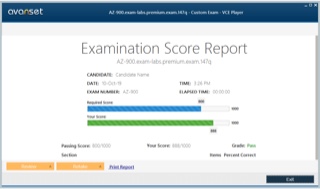
Please keep in mind before downloading file you need to install Avanset Exam Simulator Software to open VCE files. Click here to download software.
Related Exams
- 200-301 - Cisco Certified Network Associate (CCNA)
- 350-401 - Implementing Cisco Enterprise Network Core Technologies (ENCOR)
- 300-410 - Implementing Cisco Enterprise Advanced Routing and Services (ENARSI)
- 350-701 - Implementing and Operating Cisco Security Core Technologies
- 300-420 - Designing Cisco Enterprise Networks (ENSLD)
- 300-415 - Implementing Cisco SD-WAN Solutions (ENSDWI)
- 300-715 - Implementing and Configuring Cisco Identity Services Engine (300-715 SISE)
- 350-601 - Implementing and Operating Cisco Data Center Core Technologies (DCCOR)
- 810-110 - Cisco AI Technical Practitioner (AITECH)
- 350-101 - Implementing and Operating Cisco Wireless Core Technologies (WLCOR)
- 350-801 - Implementing Cisco Collaboration Core Technologies (CLCOR)
- 350-501 - Implementing and Operating Cisco Service Provider Network Core Technologies (SPCOR)
- 300-710 - Securing Networks with Cisco Firewalls
- 350-201 - Performing Cybersecurity Using Cisco Security Technologies (CBRCOR)
- 400-007 - Cisco Certified Design Expert
- 500-220 - Cisco Meraki Solutions Specialist
- 200-901 - DevNet Associate (DEVASC)
- 300-620 - Implementing Cisco Application Centric Infrastructure (DCACI)
- 200-201 - Understanding Cisco Cybersecurity Operations Fundamentals (CBROPS)
- 100-150 - Cisco Certified Support Technician (CCST) Networking
- 300-730 - Implementing Secure Solutions with Virtual Private Networks (SVPN 300-730)
- 350-901 - Designing, Deploying, and Managing Network Automation Systems
- 820-605 - Cisco Customer Success Manager (CSM)
- 300-640 - Implementing Cisco Data Center AI Infrastructure (DCAI)
- 300-745 - Designing Cisco Security Infrastructure
- 300-435 - Automating Cisco Enterprise Solutions (ENAUTO)
- 300-110 - Designing Cisco Wireless Networks (WLSD)
- 300-510 - Implementing Cisco Service Provider Advanced Routing Solutions (SPRI)
- 800-150 - Supporting Cisco Devices for Field Technicians
- 300-815 - Implementing Cisco Advanced Call Control and Mobility Services (CLASSM)
- 300-220 - Conducting Threat Hunting and Defending using Cisco Technologies for Cybersecurity
- 300-440 - Designing and Implementing Cloud Connectivity (ENCC)
- 300-720 - Securing Email with Cisco Email Security Appliance (300-720 SESA)
- 300-215 - Conducting Forensic Analysis and Incident Response Using Cisco CyberOps Technologies (CBRFIR)
- 100-160 - Cisco Certified Support Technician (CCST) Cybersecurity
- 300-425 - Designing Cisco Enterprise Wireless Networks (300-425 ENWLSD)
- 100-140 - Cisco Certified Support Technician (CCST) IT Support
- 300-610 - Designing Cisco Data Center Infrastructure for Traditional and AI Workloads
- 500-442 - Administering Cisco Contact Center Enterprise
- 300-515 - Implementing Cisco Service Provider VPN Services (SPVI)
- 700-805 - Cisco Renewals Manager (CRM)
- 300-830 - Implementing Cisco Collaboration Cloud Customer Experience (CLCCE)
- 300-445 - Designing and Implementing Enterprise Network Assurance
- 300-725 - Securing the Web with Cisco Web Security Appliance (300-725 SWSA)
- 010-151 - Supporting Cisco Data Center System Devices (DCTECH)
- 500-470 - Cisco Enterprise Networks SDA, SDWAN and ISE Exam for System Engineers (ENSDENG)
- 300-820 - Implementing Cisco Collaboration Cloud and Edge Solutions
- 300-615 - Troubleshooting Cisco Data Center Infrastructure (DCIT)
- 500-560 - Cisco Networking: On-Premise and Cloud Solutions (OCSE)
- 700-242 - Cisco Environmental Sustainability Fundamentals - Stage 1 (CESF)
- 500-443 - Advanced Administration and Reporting of Contact Center Enterprise
- 300-430 - Implementing Cisco Enterprise Wireless Networks (300-430 ENWLSI)
- 700-750 - Cisco Small and Medium Business Engineer
- 300-635 - Automating Cisco Data Center Solutions (DCAUTO)

Enter Your Email Address to Proceed
×





